
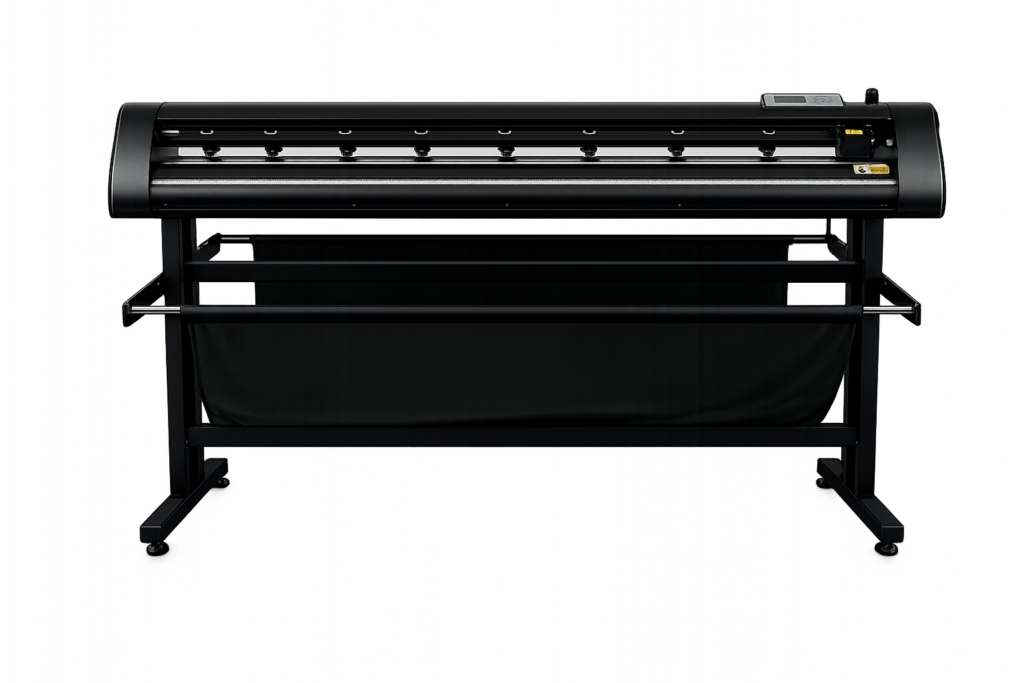
The automotive protection and customization industry has grown rapidly in recent years. Services such as window tint installation, paint protection film (PPF), and vehicle wraps have become essential for protecting and enhancing vehicles. To achieve professional results, installers rely on advanced cutting equipment known as tint and PPF cutting plotters.
These machines allow technicians to cut film patterns with high precision, eliminating the need to cut film directly on the vehicle surface. This reduces installation time, improves accuracy, and protects vehicle paint from accidental damage.
In this guide, we will explore how tint and PPF cutting plotters work, how to configure industry software, the essential tools installers need, and the best care and safety practices for long-term performance.
Understanding Tint & PPF Cutting Plotters
A tint or PPF cutting plotter is a precision vinyl cutting machine designed specifically for automotive films such as:
• Window tint film
• Paint protection film (PPF)
• Vinyl wrap film
• Decals and graphics
These machines are widely used in:
- Automotive tint shops
- Car detailing studios
- Vehicle wrap businesses
- Auto restyling centers
Instead of cutting film manually on the car, installers can load the film into the plotter and cut pre-designed patterns that perfectly match specific vehicle models.
Benefits of Using a Film Cutting Plotter
Professional installers prefer cutting plotters because they provide several advantages:
Improved accuracy
Pre-designed patterns ensure perfect shapes for windows and panels.
Faster installation
Cutting film in advance reduces installation time significantly.
Paint protection
Since no blade touches the vehicle surface, the risk of scratches is eliminated.
Reduced material waste
Accurate cutting minimizes wasted film.
For auto protection businesses, using a plotter increases productivity and ensures consistent professional results.
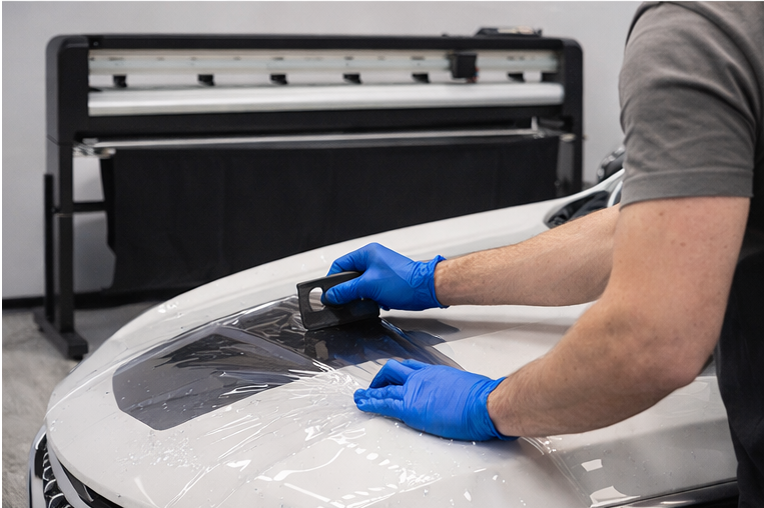
Choosing a High-Quality Tint & PPF Cutting Plotter
When selecting a cutting plotter for your business, it’s important to know what to check and which options or features must be present. This ensures you invest in a machine that is reliable, accurate, and suitable for professional use.
Key considerations include:
- Cutting accuracy and repeatability – ensures precise film patterns for all vehicle models
- Automatic tool offset & blade adjustment – reduces setup time and prevents mistakes
- Film compatibility – must handle window tint, PPF, vinyl, and decals
- Adjustable cutting force – makes plotter to accept various types of Materials
- Software support – access to pattern databases, software updates, and vehicle templates
- Durability and build quality – stable frame, long-lasting rollers, and robust blade holders
- Speed and workflow efficiency – high-speed cutting without sacrificing precision
- After-sales support and warranty – critical for troubleshooting and long-term operations
Selecting a plotter with these features guarantees consistent results, higher productivity, and long-term reliability for your auto wrap, tint, or PPF business.
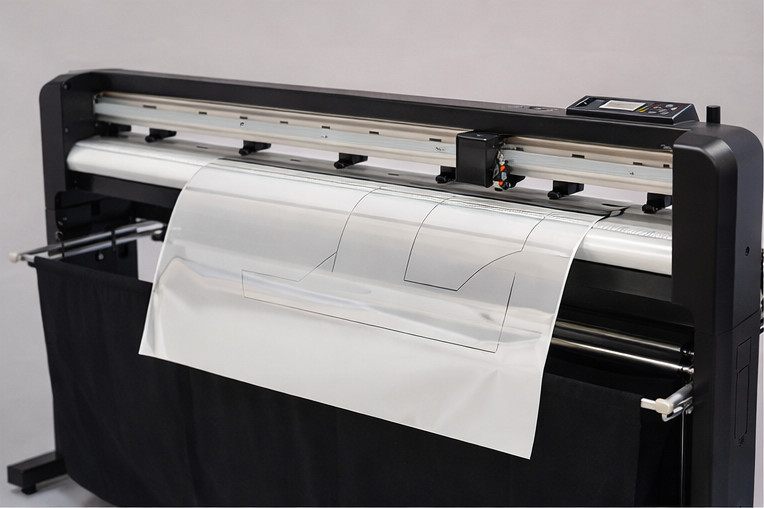
Industry Software Used for Tint & PPF Plotters
Cutting plotters rely on specialized software that contains vehicle pattern databases. These databases include thousands of vehicle models and provide precise film templates for each part of the car.
Professional installers commonly use software such as:
- Digicut
- Core
- CorelDRAW for custom graphics and decals
These software platforms allow users to select a vehicle model and automatically generate cutting patterns for different parts of the vehicle.
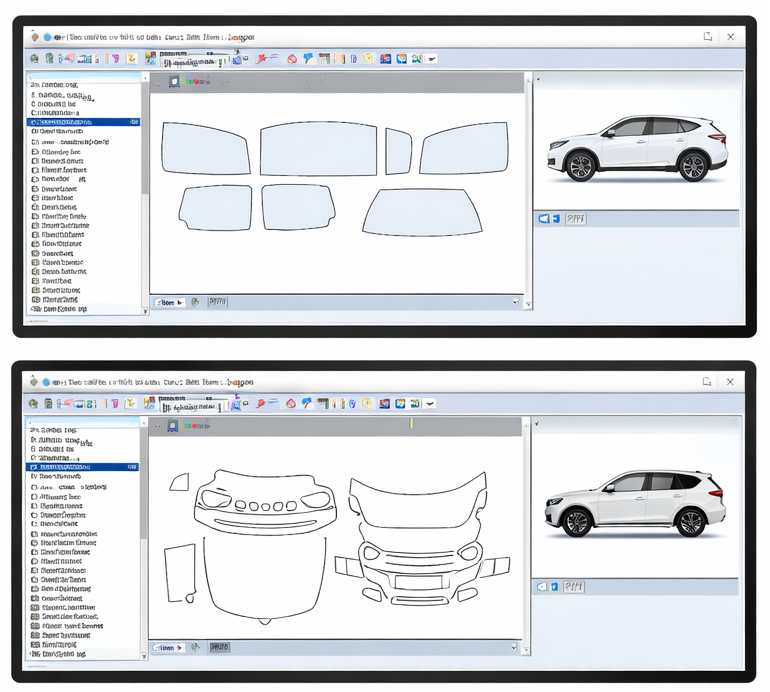
Typical Workflow
A typical workflow when using tint or PPF software involves:
- Selecting the vehicle make, model, and year
- Choosing the area to cut (window, hood, bumper, mirror, etc.)
- Adjusting pattern margins if necessary
- Sending the design to the cutting plotter
The software communicates directly with the machine and controls the cutting process. For businesses that frequently install PPF and tint, this workflow saves significant time and ensures high precision.
Setting Up a Tint or PPF Cutting Plotter
Proper machine setup is critical for accurate film cutting. Even small configuration errors can result in poor cuts or wasted material.
Step 1 – Install Plotter Drivers
Install the correct drivers on your computer to allow the software to communicate with the machine.
Step 2 – Connect the Plotter
Connect via USB, network, or serial port. USB is most common for small to medium shops.
Step 3 – Install Film Cutting Software
Configure the software for your plotter model. Most software includes device setup options.
Step 4 – Load the Film
Ensure the film is straight, rollers are aligned, and it is securely held.
Step 5 – Adjust Blade Depth
Blade depth is critical. Cut through the film only, not the backing liner.
Step 6 – Perform a Test Cut
Always run a test cut to confirm settings before production.
Essential Tools for Tint & PPF Installers
In addition to cutting plotters, installers rely on several professional tools to complete installations effectively:
- Squeegees – remove air and water during film application
- Heat Guns – shape film around curves and edges
- Precision Knives – for minor trimming if needed
- Spray Bottles – contain slip or tack solution for proper positioning
- Microfiber Cloths – remove dust and moisture
- Edge Tools – assist in wrapping film into tight spaces
Using the right tools ensures a smooth installation process and professional finish.
Best Practices for Accurate Film Cutting
- Always perform test cuts before production
- Use high-quality blades for clean, precise cuts
- Keep film properly aligned on rollers
- Adjust cutting force depending on film thickness
- Clean the machine regularly to maintain accuracy
Following these practices ensures precise cutting and reliable machine performance.
Maintenance and Care of Cutting Plotters
Regular maintenance extends the life of your machine:
- Clean cutting strip to remove debris and avoid grooves
- Replace blades periodically to maintain quality
- Check pinch rollers for dust or residue
- Update software to access new vehicle patterns
- Store in a clean, dry environment
Proper care ensures consistent performance and long-term reliability.
Safety Precautions When Operating Plotters
- Avoid contact with moving parts during operation
- Disconnect power before maintenance or blade changes
- Handle blades carefully
- Ensure proper ventilation when using heat guns and chemical solutions
Following safety guidelines helps maintain a safe working environment.
Why Tint & PPF Plotters Are Essential for Modern Auto Shops
As the demand for automotive protection services grows, businesses must adopt efficient tools to stay competitive. Tint and PPF cutting plotters provide:
- Faster installation times
- Enhances customer confidence
- Consistent professional results
- Reduced risk of vehicle damage
- Improved productivity for installers
Investing in a reliable plotter significantly improves workflow and customer satisfaction.
Conclusion
Window Tint and PPF cutting plotters are a must-have for modern automotive protection and customization businesses. By combining precision cutting technology, industry software, essential installation tools, and proper maintenance, businesses can achieve faster installations, superior results, and higher customer satisfaction.
When choosing a plotter, always consider accuracy, features, film compatibility, software support, durability, speed, and after-sales service. A well-chosen plotter is a long-term investment that ensures professional results and business growth.